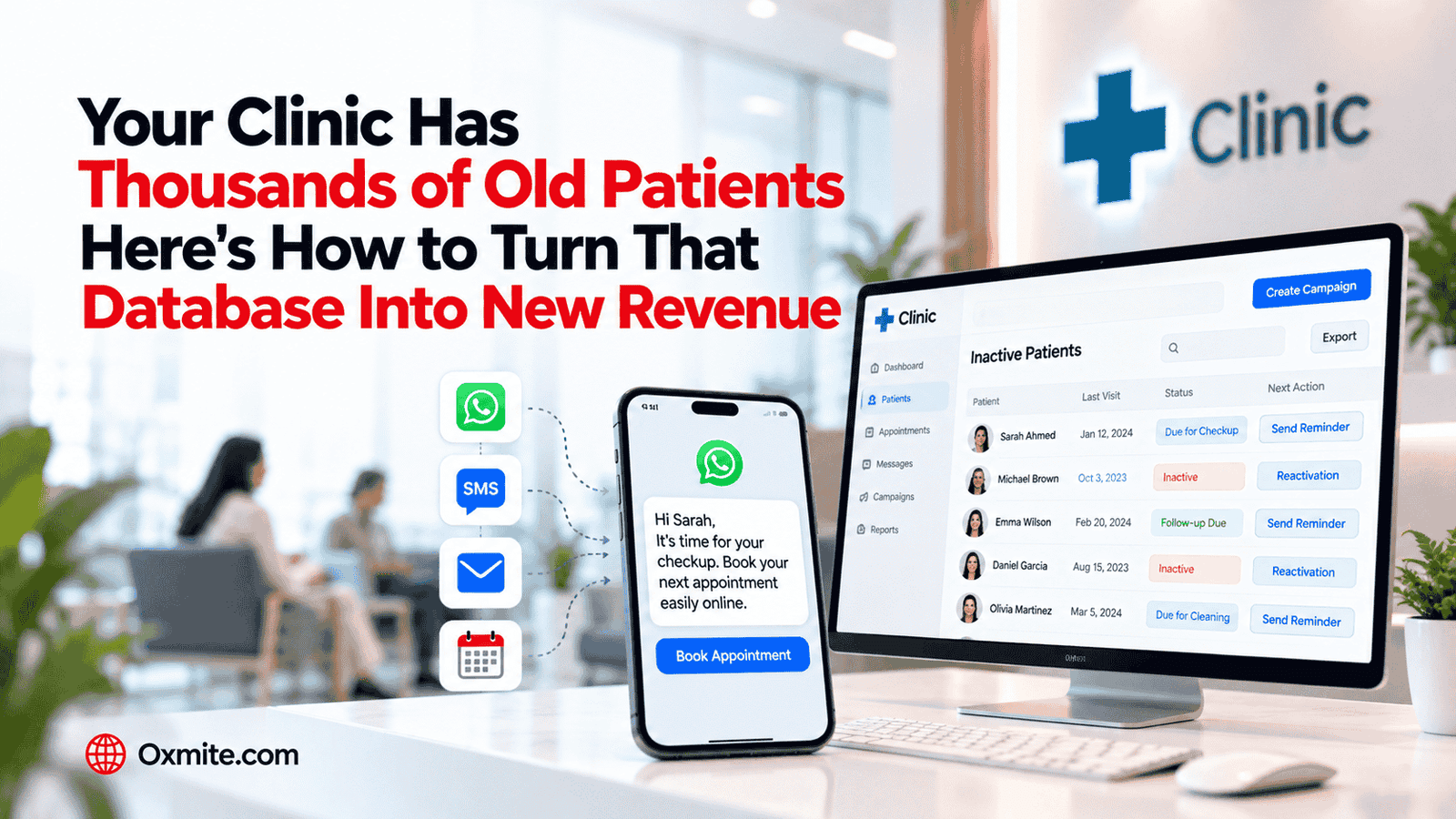
Your clinic may already have one of its most valuable growth opportunities sitting inside its patient database.
Over the years, patients book appointments, complete treatments, attend checkups and sometimes stop returning. Some may be due for routine care, while others may have postponed recommended follow-up appointments.
Instead of relying entirely on advertising to attract new patients, clinics can use patient reactivation automation to reconnect with existing patients when appropriate, improve continuity of care and recover legitimate appointment opportunities.
The goal is not to send promotional messages to thousands of contacts. It is to build an ethical, personalized and compliant system that helps patients return when they genuinely need care.
Why Your Existing Patient Database Is a Growth Opportunity
Many clinics invest heavily in Google Ads, local SEO and digital marketing to attract new patients while paying less attention to appropriate follow-up with people who have already visited.
Existing patients may already know the clinic, its services and its staff. This familiarity can make it easier for them to arrange another appointment when they need one.
However, patient records alone do not create repeat appointments.
Without a structured recall and follow-up process, legitimate opportunities for ongoing care can be missed.
A well-designed patient reactivation campaign helps clinics identify appropriate follow-up opportunities and communicate with patients through approved channels.
1. Identify Patients Who May Need Follow-Up Care
Not every inactive patient should receive the same message.
The first step is to identify patients who may have a genuine reason to return based on appropriate clinical guidance and the services previously received.
For example, a dental clinic may have patients due for routine checkups, while a physiotherapy practice may have patients who were advised to arrange follow-up visits.
Clinical staff should determine whether outreach is appropriate, especially when it relates to unfinished treatment or individual care needs.
The objective is to reconnect patients with relevant care rather than generate unnecessary appointments.
2. Organize Patient Records Through a CRM
Patient information often exists across appointment software, practice management systems, spreadsheets and communication tools.
When these systems are disconnected, reception teams may struggle to identify which patients need administrative follow-up.
A suitable healthcare CRM or integrated patient management system can help organize authorized recall workflows, appointment history, communication preferences and follow-up status.
The system should use appropriate security controls, limited access permissions and data-handling safeguards.
At Oxmite, we help businesses design CRM integrations and workflow automation around their existing operational systems.
3. Automate Routine Patient Recall Reminders
Many clinics still depend on staff manually reviewing appointment records and contacting patients individually.
This becomes difficult as the patient database grows.
With automated patient recall systems, eligible patients can receive appropriate reminders when their next appointment or routine checkup becomes due.
For example, a patient who has been advised to return for a routine review could receive a neutral reminder to contact the clinic or arrange an appointment.
Automation can reduce repetitive administrative work while helping the clinic maintain a more consistent follow-up process.
4. Use SMS, WhatsApp and Email Appropriately
Different patients prefer different communication channels.
Some respond to SMS reminders, while others prefer email, telephone calls or supported messaging services.
A patient reactivation workflow can use approved communication preferences to deliver suitable reminders through the appropriate channel.
However, clinics must distinguish healthcare-related communications from promotional marketing.
Applicable privacy, consent and marketing rules vary by jurisdiction. Promotional campaigns may require additional authorization, and sensitive health information should not be exposed in ordinary messages.
The best patient communication is relevant, respectful and easy to opt out of where applicable.
5. Reconnect With Patients Who Have Not Returned
Some patients stop booking appointments without formally ending their relationship with the clinic.
They may have moved, changed providers, forgotten a routine appointment or simply no longer need the service.
An appropriate reactivation workflow can help the clinic reconnect with eligible patients without repeatedly contacting everyone in its database.
The message should provide a clear and useful next step rather than pressure the patient into booking.
Patients who decline communication or indicate that they no longer wish to be contacted should have their preferences respected.
6. Follow Up on Unfinished Treatment Opportunities
Some patients postpone recommended treatment or do not complete an agreed care plan.
These situations require particular care.
Rather than automatically sending sales messages about unfinished treatment, clinics should use clinician-approved follow-up rules to determine whether contact is appropriate.
An administrative workflow can then support suitable appointment coordination or route the matter to a qualified member of staff.
Clinical decisions must remain with healthcare professionals, not marketing automation.
This approach supports continuity of care while avoiding inappropriate pressure or unnecessary treatment.
7. Make Rebooking Simple
A patient may receive a reminder and intend to book but abandon the process because scheduling is inconvenient.
That is why patient reactivation should connect directly with the clinic's appointment workflow.
Where supported by the existing booking software, patients can be directed to an online scheduling page or an appropriate appointment request process.
The clinic can also automate suitable booking confirmations and reminders after an appointment has been arranged.
A connected process reduces the administrative gap between patient interest and confirmed appointments.
8. Measure Reactivation Campaign Performance
A patient reactivation system should produce measurable operational outcomes.
Clinics can track eligible patients contacted, successful message delivery, appointment requests, completed bookings, opt-outs and staff time spent on follow-up.
Where appropriate, management can also evaluate realized revenue from completed appointments while accounting for communication and operational costs.
For example, if a recall campaign results in additional clinically appropriate appointments that would otherwise have remained unbooked, those completed visits may contribute additional revenue.
However, not every booking should automatically be attributed to the campaign, and results should not be treated as guaranteed.
The objective is to measure genuine value while protecting patient trust.
Patient Reactivation Should Not Become Mass Marketing
A large patient database does not automatically mean a clinic has permission to send promotional messages to every contact.
Healthcare organizations must consider patient consent, communication preferences, privacy obligations, data retention and the difference between care-related reminders and marketing.
In some jurisdictions, certain promotional uses of patient information require specific authorization.
Before launching automation, clinics should review applicable requirements and ensure that messages, segmentation and data access are appropriate.
A sustainable patient reactivation strategy should improve the patient experience, not compromise it.
Build a Connected Patient Reactivation System
The strongest patient reactivation process connects appropriate patient identification, CRM records, communication workflows and appointment scheduling.
Instead of staff manually searching old records, sending individual messages and tracking responses in spreadsheets, a connected system can support the process from approved recall identification to completed appointment.
At Oxmite, we develop CRM integrations, patient communication workflows and business automation systems that can be adapted to clinic requirements.
Our focus is on reducing repetitive administrative work, improving follow-up reliability and helping clinics make better use of their existing appointment capacity.
Final Takeaway
Your clinic may not need to depend entirely on new patient advertising to create additional appointment opportunities.
Existing patients who are appropriately due for follow-up care can represent a valuable opportunity to improve continuity, scheduling efficiency and revenue.
Patient reactivation automation helps clinics organize suitable recalls, communicate through approved channels, simplify rebooking and measure the results.
The key is to build a system that respects clinical judgment, patient privacy and individual communication preferences.
Is your clinic missing legitimate follow-up opportunities because patient records and communication systems are disconnected?
Build a Patient Reactivation Campaign with Oxmite and explore how CRM integration, automated recalls and appointment workflows could support your clinic's growth.