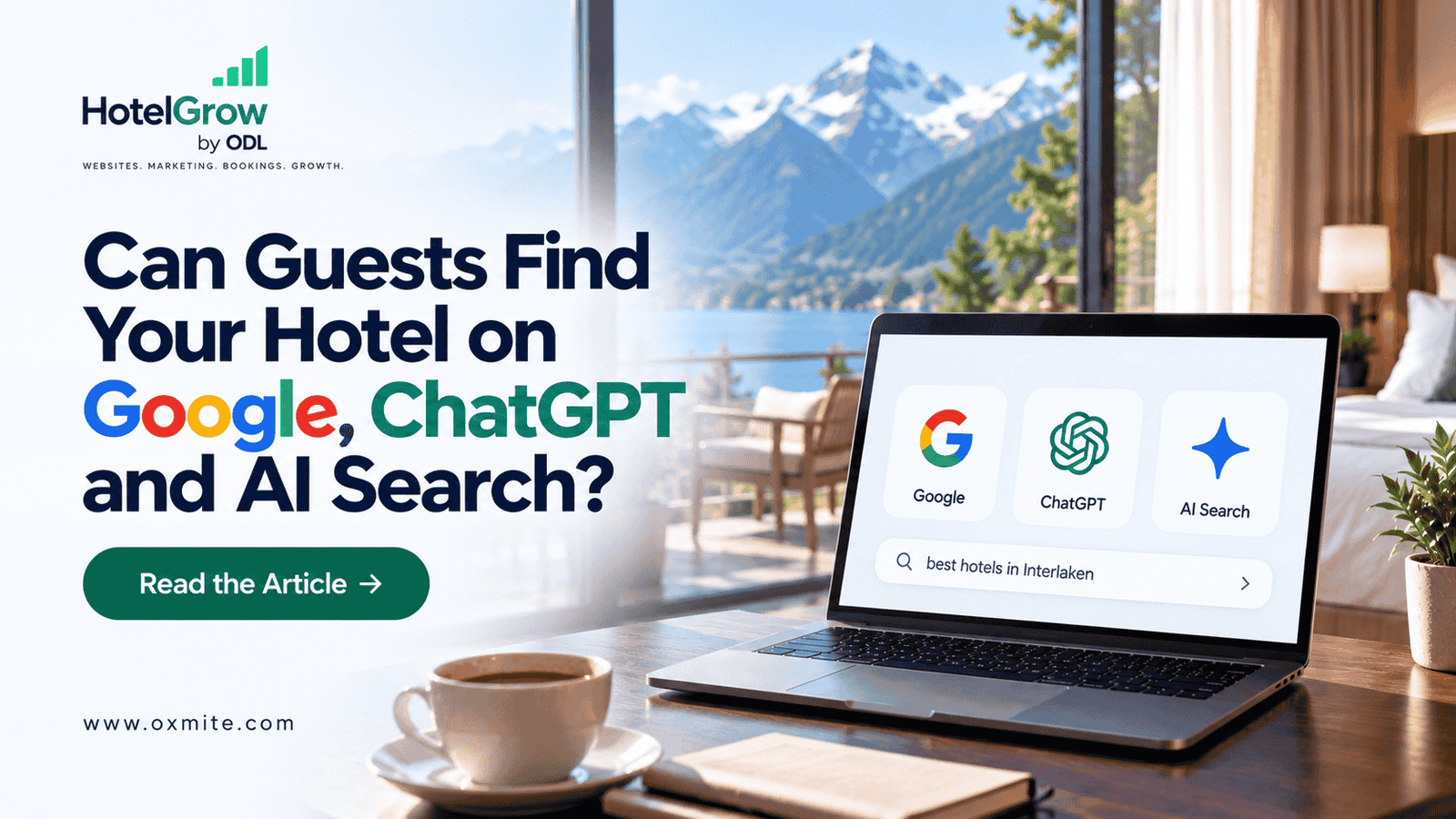
Your next guest may not begin by searching for your hotel name. They may search Google for the best hotel near an attraction, explore Google Maps, compare properties on a travel platform or ask an AI assistant which hotel fits their location, activity or travel needs.
That makes hotel SEO broader than ranking for your brand name. Independent hotels need clear, crawlable and useful information that helps search engines, maps, travel platforms and AI-powered discovery systems understand what the property offers, where it is located and which travellers it may be relevant to.
The goal is not to chase every new AI platform. It is to build a strong digital visibility foundation that works across multiple discovery environments.
Hotel Discovery Is Becoming Multi-Platform
The path to discovering a hotel is increasingly fragmented.
A potential guest might first encounter your property through Google Search, Google Maps, an OTA, destination content, social media or an AI-assisted search experience. They may then search your hotel name, visit your website and compare information across several sources before making a booking decision.
This means your hotel's website should not operate as an isolated brochure.
Your website, local listings, destination content, technical SEO and third-party information should work together to create a clear and consistent digital presence.
A broader hotel direct-booking and digital growth strategy can connect visibility with the booking journey so that discovery has a clear path toward direct conversion.
Can Guests Find Your Hotel on Google?
Branded searches are important, but they reach people who already know your hotel.
The larger SEO opportunity can include travellers searching without a specific hotel in mind.
A potential guest may search for accommodation based on a destination, activity, attraction or type of stay.
For example, a hotel could potentially build relevant visibility around searches related to family stays, hiking, skiing, business travel, romantic weekends, local attractions or seasonal experiences when those topics genuinely match the property.
Strong hotel SEO helps search engines understand these connections and gives your property more opportunities to appear earlier in the travel-planning journey.
Can Guests Find Your Hotel on Google Maps?
Local search is another important part of hotel discovery.
Your Google Business Profile should accurately represent the property and remain consistent with information on your website and other important online sources.
Pay attention to details such as your hotel name, location, website, contact information, category, photographs and relevant property information.
Reviews also contribute useful information for travellers evaluating a hotel.
The objective is consistency. A guest should not encounter conflicting information depending on where they discover your property.
What Happens After Someone Finds You on a Travel Platform?
Travel platforms can introduce your property to guests who may never have heard of it before.
But discovery does not necessarily end there.
A traveller may see your property on an OTA and then search the hotel name on Google, open the website, check the location, compare rooms or look for direct-booking information.
That creates another opportunity for your owned digital presence.
If the hotel website is difficult to find, contains outdated information or provides a weak booking experience, the traveller may return to the platform where the discovery started.
Search visibility and hotel website conversion therefore need to support each other.
Can Guests Find Your Hotel on ChatGPT and AI Search?
AI-assisted discovery introduces another way travellers can research accommodation.
Instead of typing a short keyword, a traveller might ask a detailed question about where to stay based on location, activities, family requirements or a particular type of trip.
There is no reliable method that guarantees your hotel will be mentioned in a specific AI-generated answer.
The practical objective is to make your public hotel information easy to access, understand and verify.
For ChatGPT search specifically, publicly accessible websites can be eligible to appear in search results. Website owners should also ensure that relevant public pages are technically accessible to supported search crawlers if they want those pages to be discoverable.
This makes hotel AI search visibility an extension of strong technical SEO, useful content and clear online information rather than a replacement for them.
Give Search and AI Systems Clear Hotel Information
Search systems cannot understand your hotel effectively if the important information is vague, incomplete or inconsistent.
Your website should clearly explain:
What is the hotel?
Where is it located?
What rooms and facilities does it offer?
Which experiences are available nearby?
Who might the property be suitable for?
What important booking, arrival and stay information should guests know?
Write this information primarily for travellers. Clear content also gives search and AI systems better context for understanding your property.
Make Sure Your Hotel Website Can Be Crawled
Content cannot contribute much to organic discovery if search systems cannot properly access it.
Technical hotel SEO should therefore provide the foundation.
Important pages should be crawlable, logically structured and internally connected. Page titles, headings, canonical signals, mobile usability and site performance should also be reviewed as part of the technical foundation.
For websites seeking visibility through ChatGPT search, crawler configuration should also be checked so relevant public pages are not unintentionally blocking supported search crawlers.
Technical SEO is rarely the exciting part of hotel marketing, but it determines whether the rest of your content has a solid foundation.
Use Structured Data and Consistent Hotel Information
Structured data can provide search engines with additional machine-readable information about a page and its content.
It should support information that is genuinely present and accurate on the website rather than being used to create claims that visitors cannot verify.
Consistency matters beyond structured data as well.
Your hotel name, location, contact information and other important property details should remain accurate across your website and major online profiles.
The easier your property is to identify consistently, the stronger the foundation for search visibility becomes.
Create Destination and Experience Content
Many hotels create detailed room pages but very little content about why a guest should visit the destination.
That misses an important part of travel discovery.
Useful content might explain:
- What to do near the hotel
- Seasonal activities
- Local attractions
- Transport and arrival information
- Family activities
- Hiking or skiing opportunities
- Events and experiences
The purpose is not to publish dozens of generic SEO articles.
Create content that genuinely helps your target guest plan a stay and naturally connects the destination experience with your property.
Answer the Questions Guests Actually Ask
Question-based content is useful because travellers increasingly search conversationally.
Your website should clearly answer practical questions about parking, breakfast, check-in, cancellation, accessibility, family stays, pets, transport, nearby attractions and other relevant topics.
These answers can live on appropriate room, service, destination or FAQ sections depending on the question.
The objective is simple: make useful hotel information easy for both guests and discovery systems to find and understand.
Build Authority Beyond Your Own Website
Your hotel website is important, but it is not the only source travellers may encounter.
Reviews, destination websites, tourism organizations, travel publications and other legitimate third-party references can contribute to the broader online footprint around a property.
Focus on earning accurate, relevant references rather than creating large volumes of low-quality mentions.
A strong digital presence should make the hotel appear consistent and credible wherever a potential guest researches it.
Run a Hotel Search and AI Visibility Audit
You can perform a simple visibility check yourself.
- Search your hotel name on Google and review what appears.
- Search important non-brand destination terms relevant to your property.
- Review how your hotel appears in Google Maps.
- Compare your website information with major travel-platform listings.
- Check whether important hotel and destination pages can be crawled.
- Review whether rooms, amenities, location and policies are clearly explained.
- Test relevant travel questions in selected AI-search environments.
- Record missing, outdated or inconsistent information.
Do not judge the audit only by whether an AI assistant mentions your hotel once. AI-generated responses can vary.
Look instead at whether your hotel's digital information is accessible, consistent, useful and easy to understand across discovery channels.
Make Your Hotel Easier to Find and Understand
Hotel search visibility is no longer only about ranking one page for one keyword.
Guests can move between Google Search, Maps, OTAs, your website and AI-powered discovery tools before choosing where to stay.
The strongest response is not chasing every platform individually. It is building a reliable digital foundation based on technical SEO, local visibility, useful destination content, clear hotel information and consistent online signals.
At Oxmite, our HotelGrow approach connects hotel SEO, content, website optimization, digital marketing and AI-search visibility into a broader direct-booking growth strategy.
Final Takeaway
Your hotel cannot control exactly where Google, ChatGPT or another AI system will display or mention it.
What you can control is the quality of the information available about your property.
Make your website technically accessible. Keep important hotel information consistent. Create useful destination and experience content. Answer real guest questions clearly. Strengthen your local presence and build legitimate online authority.
These foundations support hotel SEO today while also preparing your property for an increasingly AI-assisted travel discovery journey.
Can future guests find and understand your hotel online?
Request a Free Hotel Search & AI Visibility Audit and let ODL review your hotel's visibility across Google, Maps, website content and selected AI-search environments.