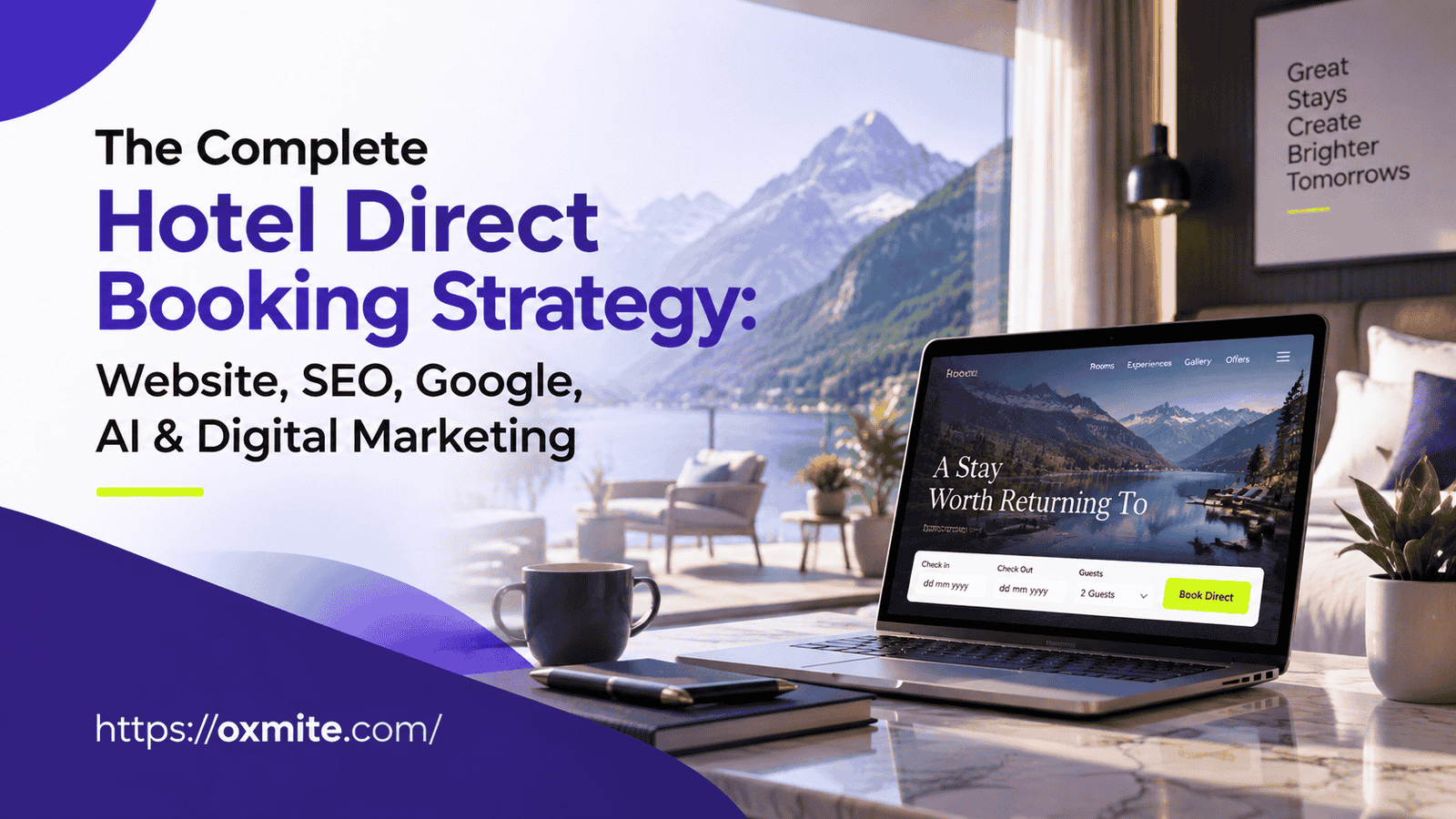
The Complete Hotel Direct Booking Strategy: Building a System for Sustainable Hotel Growth
Direct bookings do not come from one channel. They come from a connected system that makes your hotel discoverable, bookable, trustworthy and measurable.
Many hotels invest in a website, run advertisements or create social media content, but these activities often work separately. A successful hotel direct booking strategy connects technology, search visibility, marketing and guest communication into one revenue-focused system.
The goal is simple: attract more qualified guests, convert more website visitors into bookings and build stronger ownership of your customer relationships.
For independent hotels especially, direct booking is no longer only about avoiding OTA commissions. It is about creating a complete digital sales channel that supports long-term revenue growth.
What Is a Hotel Direct Booking Strategy?
A hotel direct booking strategy is a complete approach that helps hotels generate reservations through their own website and digital channels instead of depending only on online travel agencies.
A strong strategy combines:
- A conversion-focused hotel website
- A reliable booking engine
- PMS and channel manager integration
- SEO and local search optimization
- Content marketing
- AI search visibility
- Google and Meta advertising
- Guest communication automation
- Revenue and performance tracking
Each part supports the same objective: creating more owned demand and improving booking profitability.
Step 1: Build Your Owned Booking Platform — Website + Booking Engine
Your hotel website should not only display information. It should work as a revenue channel.
A modern hotel website should help visitors:
- Understand your rooms and experiences
- Trust your property
- Check availability easily
- Compare offers
- Complete a direct reservation quickly
A professional hotel booking engine allows guests to book directly while giving your hotel more control over the customer journey.
Important website elements include:
- Mobile-friendly design
- Fast loading speed
- Clear room presentation
- High-quality photography
- Guest reviews and trust signals
- Simple booking process
- Direct booking offers
Step 2: Connect PMS and Channel Management Systems
Technology integration is essential for hotels managing multiple booking channels.
Connecting your website booking engine with your existing systems helps synchronize:
- Room availability
- Rates
- Reservations
- Inventory
- Guest information
Hotels using platforms such as SiteMinder, Cloudbeds, HotelRunner, Mews and RateGain can create a more connected booking ecosystem when technical compatibility and API access are available.
The result is fewer manual processes and better operational control.
Step 3: Track Analytics, Attribution and Conversion Performance
A hotel cannot improve what it does not measure.
A complete hotel direct booking strategy requires visibility into:
- Website visitors
- Booking conversions
- Traffic sources
- Campaign performance
- Guest acquisition cost
- Revenue generated from each channel
Analytics helps identify which marketing activities actually generate business instead of only generating clicks.
This allows hotels to invest more confidently in channels that produce measurable results.
Step 4: Improve Hotel SEO and Search Visibility
Search engines remain one of the most important ways travellers discover hotels.
Hotel SEO helps your property appear when potential guests search for:
- Hotels in your destination
- Things to do nearby
- Best places to stay
- Specific room types or experiences
A strong hotel SEO strategy includes:
- Technical SEO improvements
- Local SEO optimization
- Google Business Profile optimization
- Destination-focused content
- Website structure improvements
- Internal linking
Better visibility creates more opportunities for direct website bookings.
Step 5: Create Content That Helps Travellers Choose Your Hotel
Many hotels focus only on room pages. However, travellers search for experiences, destinations and solutions before they decide where to stay.
Useful hotel content can include:
- Destination guides
- Seasonal travel guides
- Local attraction pages
- Ski or adventure packages
- Restaurant and experience recommendations
- Travel planning resources
Content builds trust before the guest reaches the booking stage.
It also improves visibility across Google search and AI-powered search experiences.
Step 6: Prepare Your Hotel for AI Search Visibility
The way travellers find information is changing.
Guests increasingly use AI assistants and search experiences to discover destinations, compare options and plan trips.
Hotels should improve their hotel AI search visibility by creating clear, structured and useful information.
This includes:
- Answering common traveller questions
- Creating detailed destination content
- Providing accurate hotel information
- Structuring website content clearly
- Building strong online authority
AI systems need reliable information to understand and recommend your hotel.
Step 7: Use Google and Meta Advertising to Capture Demand
SEO builds long-term visibility, but paid marketing helps hotels reach guests actively searching and planning trips.
Google Ads can help target travellers with strong booking intent.
Meta advertising can help hotels:
- Promote offers
- Reach specific audiences
- Build brand awareness
- Retarget interested visitors
A successful advertising strategy focuses on profitable bookings rather than simply increasing website traffic.
Step 8: Retarget Visitors and Recover Lost Booking Opportunities
Many visitors do not book during their first website visit.
Retargeting helps hotels reconnect with potential guests who:
- Viewed rooms
- Checked offers
- Started booking
- Left without completing a reservation
Through carefully planned campaigns, hotels can bring interested travellers back and increase conversion opportunities.
Step 9: Automate Guest Communication and Repeat Bookings
Marketing automation helps hotels maintain relationships before and after a stay.
Examples include:
- Booking confirmation emails
- Pre-arrival communication
- Upsell opportunities
- Post-stay feedback requests
- Repeat guest campaigns
Automation improves guest experience while reducing repetitive manual work.
Step 10: Measure Direct Revenue and Channel Performance
A successful hotel direct booking strategy requires continuous improvement.
Hotels should regularly measure:
- Direct booking revenue
- OTA dependency
- Website conversion rate
- Marketing return on investment
- Customer acquisition cost
- Repeat booking performance
The objective is not only more bookings. It is more profitable bookings.
How Small Independent Hotels Should Prioritize Their Growth System
Small hotels do not need to implement everything at once.
A practical approach:
- Improve the website and booking experience
- Connect booking technology and operational systems
- Fix SEO and local visibility foundations
- Create useful destination content
- Launch targeted marketing campaigns
- Add automation and AI-powered improvements
Building the system step by step creates sustainable growth without wasting resources.
Turn Your Hotel Website Into a Revenue Growth Channel
A successful hotel does not rely on one marketing tactic. It builds a connected direct booking ecosystem where technology, SEO, AI visibility and digital marketing work together.
At ODL, we help hotels create complete digital growth systems through website development, booking solutions, SEO, digital marketing, automation and AI-powered visibility strategies.
Our HotelGrow solution is designed to help independent hotels strengthen their direct booking channel and create a more measurable path toward revenue growth.
Based on our experience supporting hotels including Hotel Rebstock Meiringen, we understand how technology and digital marketing can work together to improve direct booking performance.
Request your Free 10-Point Hotel Growth Audit and discover which parts of your direct booking system are missing.